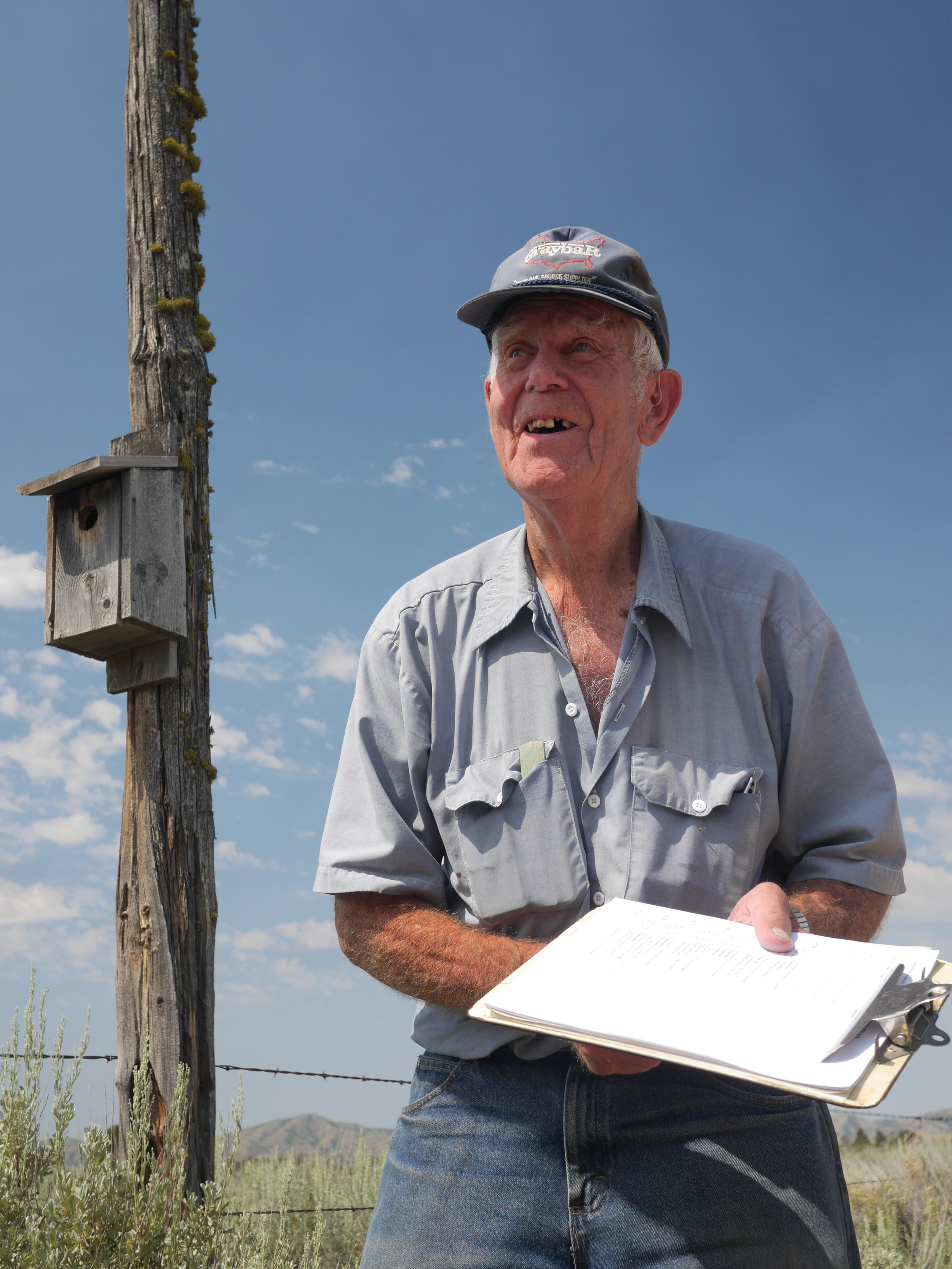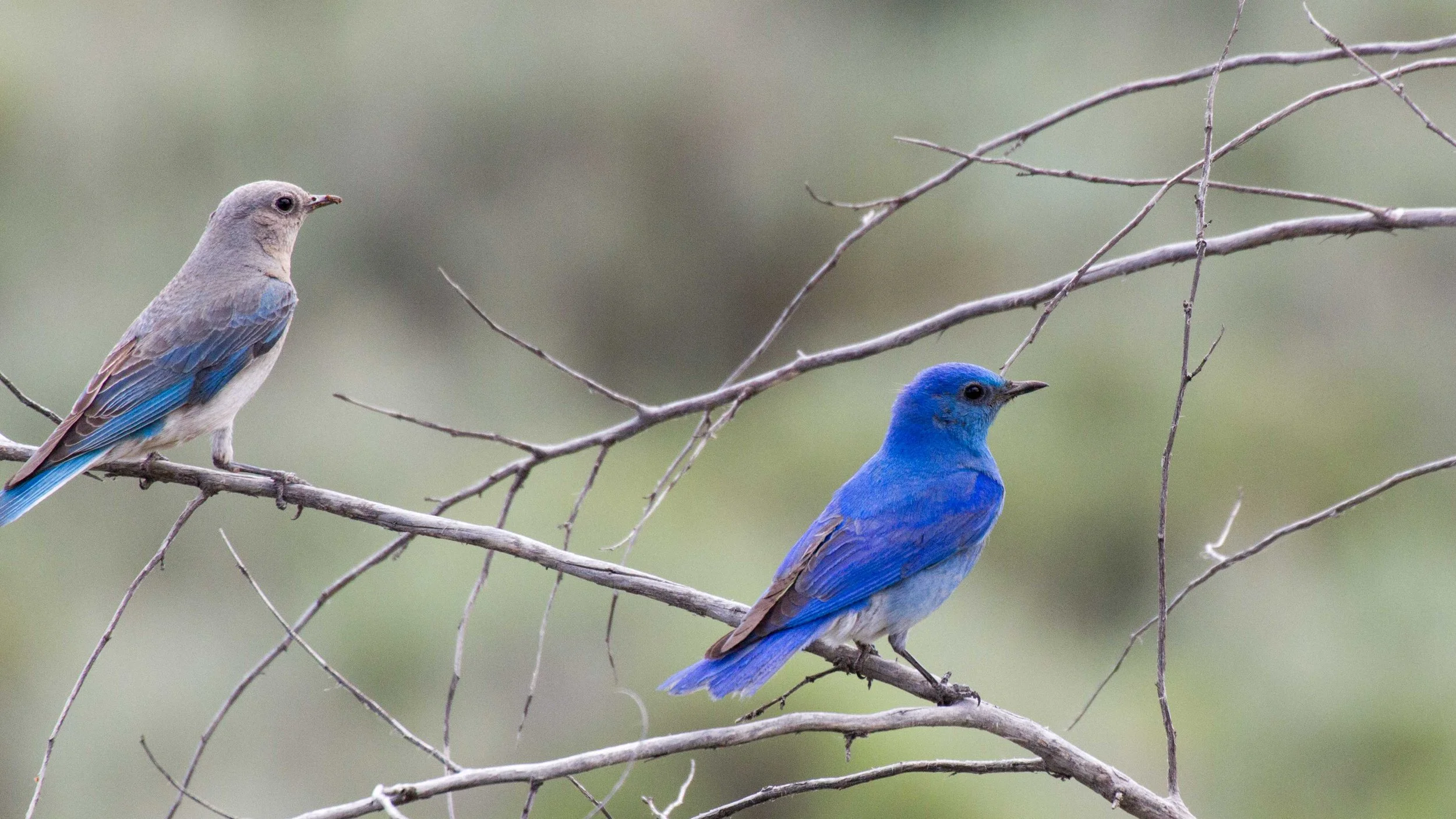
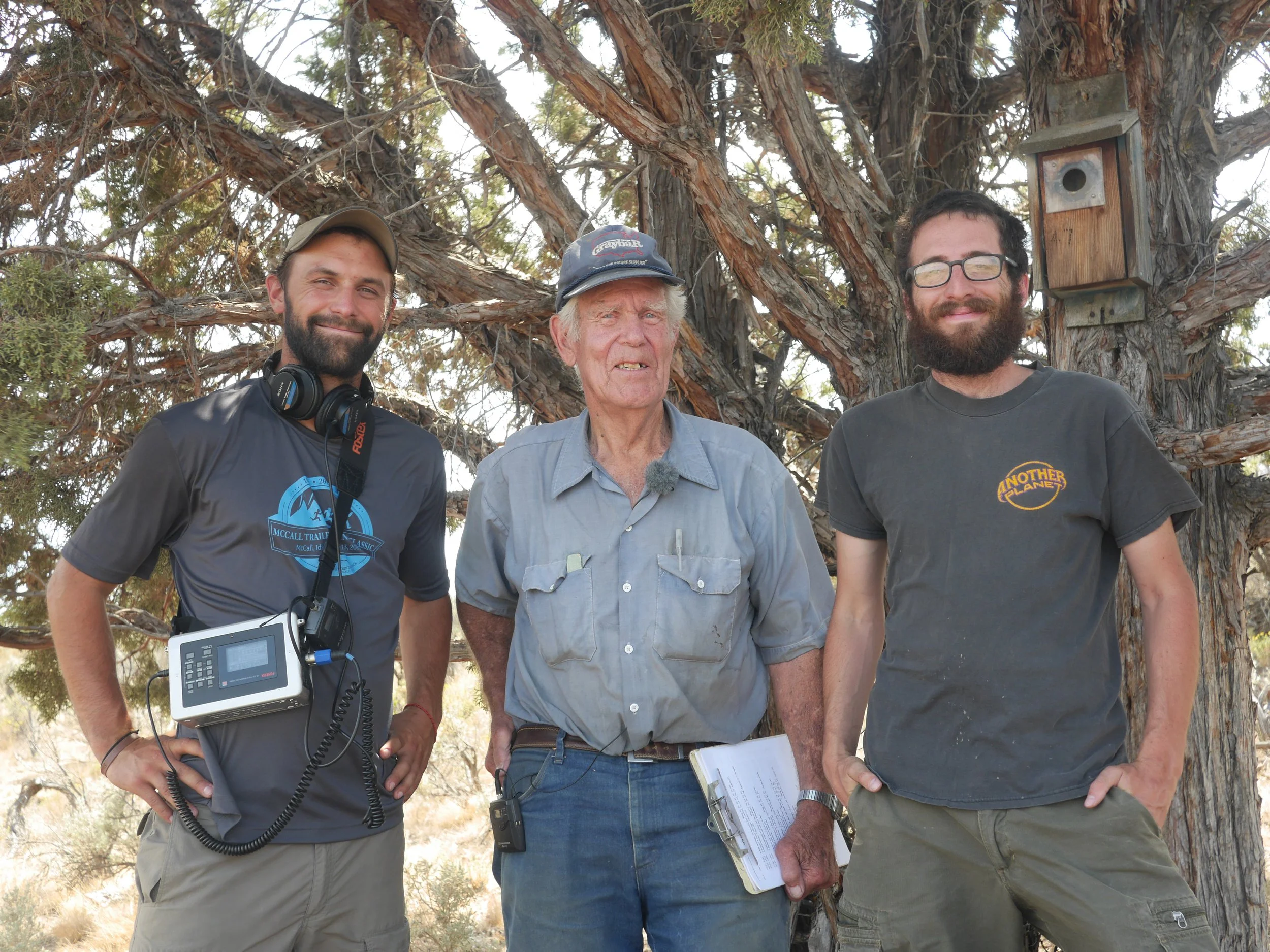
Al Larson was one of the first citizen scientists to take up the North American Bluebird Society’s call to action back in 1978. Al was nearing retirement and was inspired to return to the Owyhee Mountains where he spent much of his childhood. It was here, in these remote mountains along the Idaho/Oregon border where Al set up his first nestboxes for bluebirds. 35 years later, at age 91, Al was still monitoring his bluebird boxes in the Owyhee Mountains. This is when he first met Neil Paprocki and Matt Podolsky, the Bluebird Man filmmakers. Neil and Matt tagged along with Al, capturing his process as he monitored every stage of the breeding cycle from nest building, to egg laying, hatching, and finally the fledging of the bluebird chicks. Al attaches a leg band to each nestling before it fledges, identifying that bird with a unique federal ID number. Al banded more than 30,000 bluebirds over a 40 year period.
Bluebird Man chronicles Al’s continued efforts to conserve bluebirds throughout Southern Idaho despite his advancing age. Stunning scenery, intimate conversations and breathtaking footage of all three species of bluebird create a powerful film that reveals the secret behind Al’s longevity while providing inspiration for our next generation of citizen scientists.
Click here to learn more about the film
Watch the full film on YouTube
Bluebird Man
One Man’s Remarkable Role in the Successful Recovery of Bluebirds.
Click here to watch the full film on the wild commons youtube channel.
Bluebird Man is a half hour documentary film about bluebird conservation and citizen science. The film focuses on the efforts of Alfred Larson, who monitored and maintained over 300 nestboxes for bluebirds in Idaho for more than 40 years.
Bluebirds across North America faced precipitous declines during the 1950s, 60s and 70s due in part to increased competition for available nesting cavities. As a secondary cavity nester, bluebirds rely on tree cavities to build their nests and introduced species such as European Starlings and House Sparrows often outcompete bluebirds for these nesting cavities. In 1978 a group of concerned scientists and bluebird lovers established the North American Bluebird Society, a non-profit group committed to conservation of the bluebird.
By launching a campaign designed to encourage citizens from all walks of life to put up nestboxes specifically designed for bluebirds, this organization played an instrumental role in the bluebird’s recovery. Today bluebird populations are at close to historic levels all across North America. Despite this remarkable success, bluebird conservationists must find a way to motivate younger generations to continue the important work of monitoring and maintaining nestboxes for these birds or else this dramatic recovery could be lost.