
So You Finished Your Documentary. Now What?
A filmmaker's guide to self-distributing independent wildlife and environmental films
You spent years making your documentary. You survived the final export, the sleepless nights, the premiere. And then someone asks the question every independent filmmaker dreads: "So what's your distribution plan?"
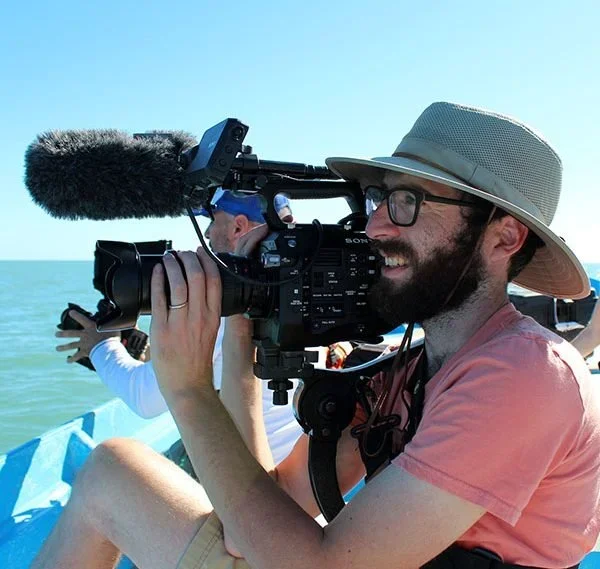
Matt Podolsky filming Sea of Shadows
If your honest answer is "I'm figuring it out," you're in good company. Most of us came to wildlife filmmaking because we care about the natural world and the people working to protect it, not because we dreamed of building email spreadsheets and negotiating screening licenses. But here's the thing I’ve learned through years of making and releasing films at Wild Lens, and through countless conversations with other independent documentary filmmakers: distribution isn't a dark art reserved for people with sales agents and studio deals. For most independent wildlife and environmental docs, self-distribution is the best available option.
I’ve produced and directed films that have been picked up by major distributors, and I’ve run my own self-distribution campaigns. Although the idea of handing the entire distribution process over to someone else can be incredibly appealing, it’s often not the best way to achieve your goals as a filmmaker. And these days, it’s an option that is rarely on the table.
This guide pulls together what I’ve learned into a practical starting point.
Step one: know what you actually want
Before you send a single email, get clear on your goal. Distribution strategist Jon Reiss frames it as a choice between four possible goals: impact (the greatest positive change), audience (the most eyes on the film), money (maximum revenue), or career (the film as a stepping stone to what's next).
The key is to pick one. Impact and audience often overlap naturally, but trying to optimize for everything at once dilutes your strategy. The choices that maximize revenue are sometimes in opposition to the ones that maximize reach. For many wildlife and environmental filmmakers, impact and/or audience will be the most natural fit, but it’s important to go through this thought process and define goals early on.
While working on The Invisible Mammal, the feature documentary about bats that I produced and self-distributed, I participated in a workshop hosted by Jon Reiss and focused on self-distribution strategies. Jon spent a lot of time in the workshop highlighting the importance of this decision, and for good reason. This choice will shape many of the decisions that follow.
Step two: your community is your distribution network
The most powerful distribution asset you have isn't a platform or a publicist. It's the network you built while making the film. Almost all documentaries have a niche, a community that already exists and already cares about the story told in your film. Within these tight-knit communities, word travels fast.
Start by mapping it out:
The inner circle: everyone directly connected to the film, including researchers, organizations, subjects, and their networks
Core communities: university departments, conservation nonprofits, and groups focused on your issue or topic, but not directly involved in the film (yet!)
Potential partners: organizations that focus on issues or topics that are adjacent to your story, and might be interested in hosting a screening of your film
Your end product should be a spreadsheet with hundreds, or thousands of names and email addresses, built methodically, starting with the people most likely to say yes. Those early yeses build momentum for everything that comes after.
For The Invisible Mammal, we had already done a lot of networking and community building during production. We ran a crowdfunding campaign to raise production funds in 2022, and this forced our team to do a lot of this community building work long before we reached the distribution stage. This was a huge benefit that we got from the campaign beyond the funds that we raised.
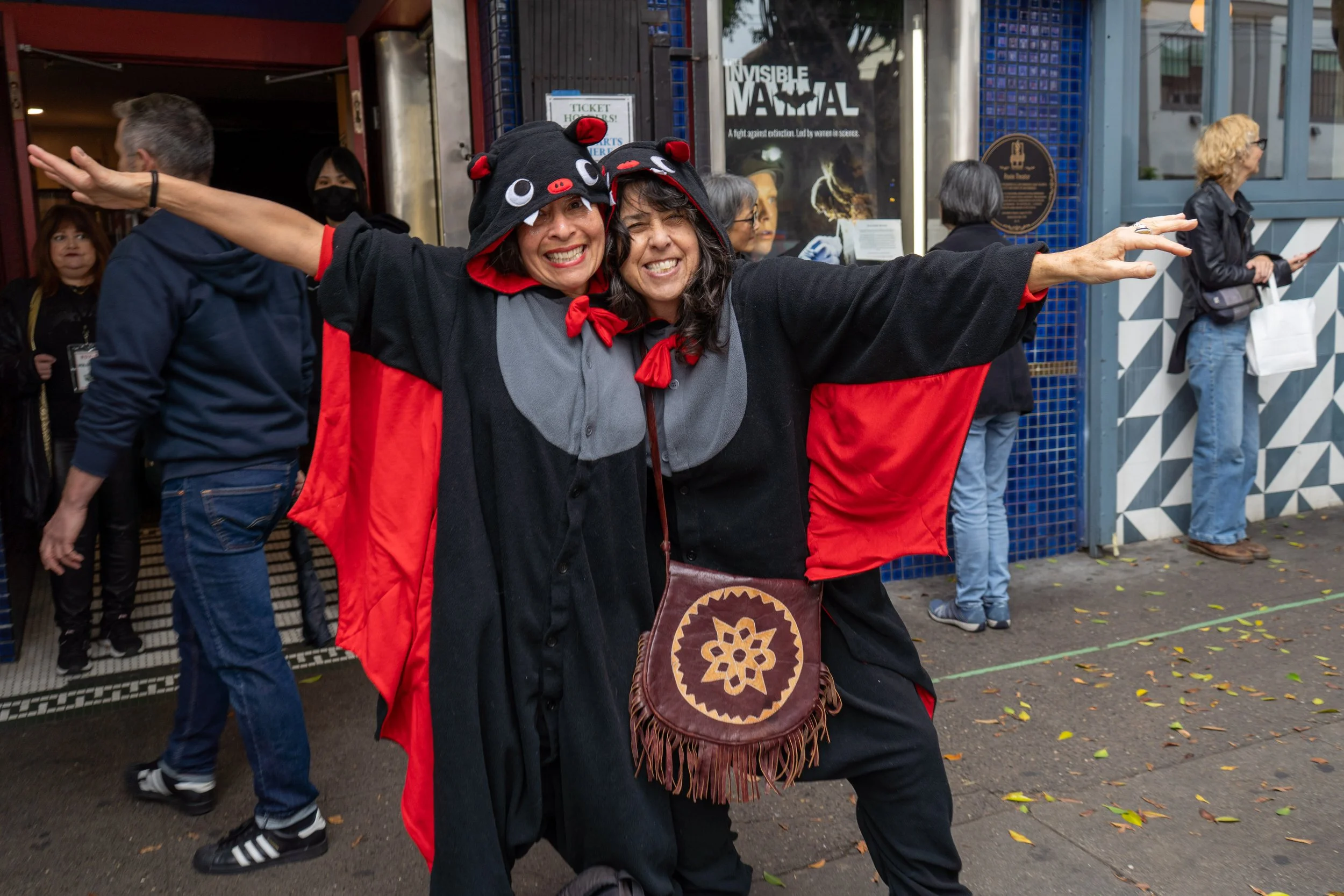
Supporters at The Invisible Mammal’s premiere at The Roxie
Step three: don't rush the launch
The premiere of your film is the first step towards distribution, but it doesn’t have to be the formal launch of your self-distribution campaign. While your distribution planning process should begin well before your premiere, for most films it doesn’t make sense to dive immediately into self-distribution.
Instead, I’d suggest picking a date that anchors your launch to a meaningful moment. Find an awareness week or existing celebration that’s connected to your film’s topic in some way and plan your launch around that window. This will give your outreach a natural focal point and create a gentle sense of urgency for potential screening hosts.
For The Invisible Mammal, we premiered in May of 2025 at DocLands Documentary Film Festival, and chose the last week of October for the launch of our self-distribution campaign. The last week of October is Bat Week, a week-long global celebration of bats, which provided a natural anchor point for our bat-focused documentary.
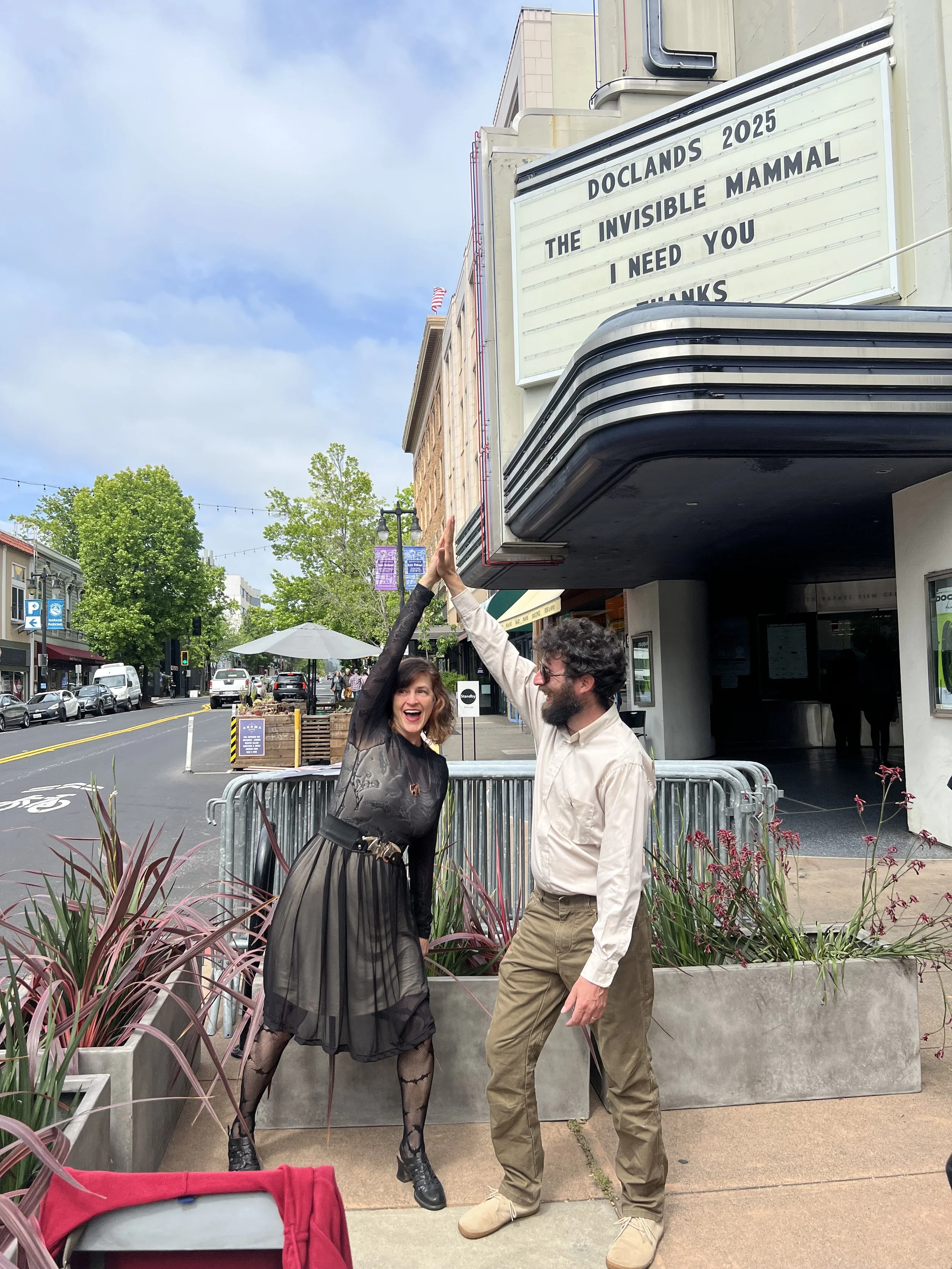
Producer Matt Podolsky and Director Kristin Tieche at the Doclands Premiere of The Invisible Mammal.
Choosing Bat Week as our launch point also allowed us to tap into an existing organizational network. Bat Week event organizers welcomed our team members onto their committee and agreed to help promote our campaign launch.
Step four: let a screening platform handle the logistics
Managing grassroots community screenings manually involves sending links, tracking payments, and coordinating venues. It’s a logistical nightmare that will eat time that should be spent cultivating relationships.
Platforms built specifically for community screenings help solve this problem. Our team behind The Invisible Mammal used Kinema, which has become one of most widely used platforms of it’s kind in the independent documentary world. Lots of high profile films are using Kinema these days to manage screening campaigns, including the Oscar-winning documentary No Other Land. Eventive is another option that offers comparable functionality.
Both let you:
Share a film page where potential hosts can directly book a screening
Set tiered pricing by audience size and organization type (nonprofit, for-profit, educational)
Choose between revenue splits and upfront license purchases
Offer virtual and on-demand screening options
Automate the delivery of screening links, so you stay hands-off on logistics
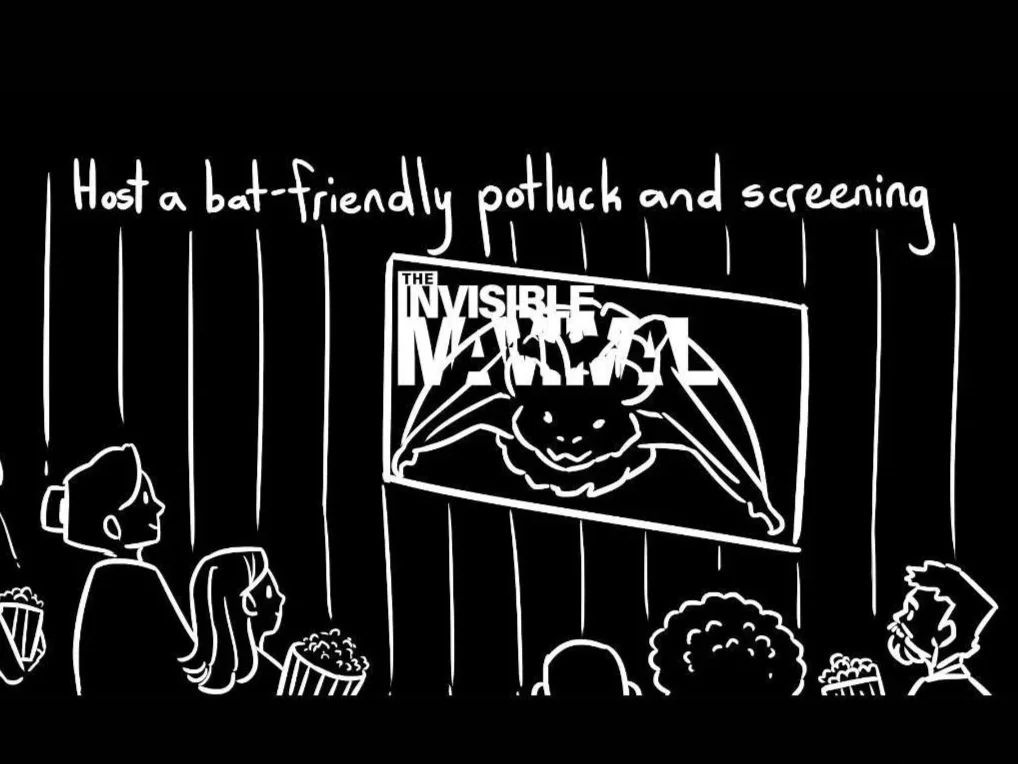
You can also create custom pricing tiers beyond the defaults — including low-cost tiers for small, informal gatherings like a screening in someone's living room. For The Invisible Mammal, we created a tier for folks interested in hosting a screening of 5 people or less, and encouraged folks to host potluck dinners using bat-friendly ingredients (we even have a bat-themed cookbook!).
Step five: make your outreach personal
Mass emails have their place, but outreach will always be more effective when it feels human. It’s ok to use a template, but write a tailored opening line for every contact that shows you know who they are and why you're reaching out to them specifically.
Pair every email with a screening guide: a simple one-or-two-page document that walks first-time hosts through the process of promoting a screening. Most hosts won't need much hand-holding, but having the resource ready builds confidence.
A reality check on film festivals
Festivals are still worth pursuing. They provide visibility, credibility, and a community of fellow filmmakers. But it's important to understand how much the landscape has shifted over the past several years.
The years between roughly 2016 and 2019 were the peak of the streaming acquisition era, when platforms were aggressively buying independent documentaries. That era is largely over. Today, mainstream streamers are rarely buying independently produced documentaries, and when they are, it’s almost exclusively true crime and celebrity bio-docs. Even Sundance, which was once a top documentary sales market, now rarely generates sales.
I experienced this first hand. Sea of Shadows, the feature documentary that I co-directed with Richard Ladkani and Sean Bogle, premiered at Sundance in 2019 and was bought during the festival by National Geographic. A sale like that simply wouldn’t happen in today’s market.
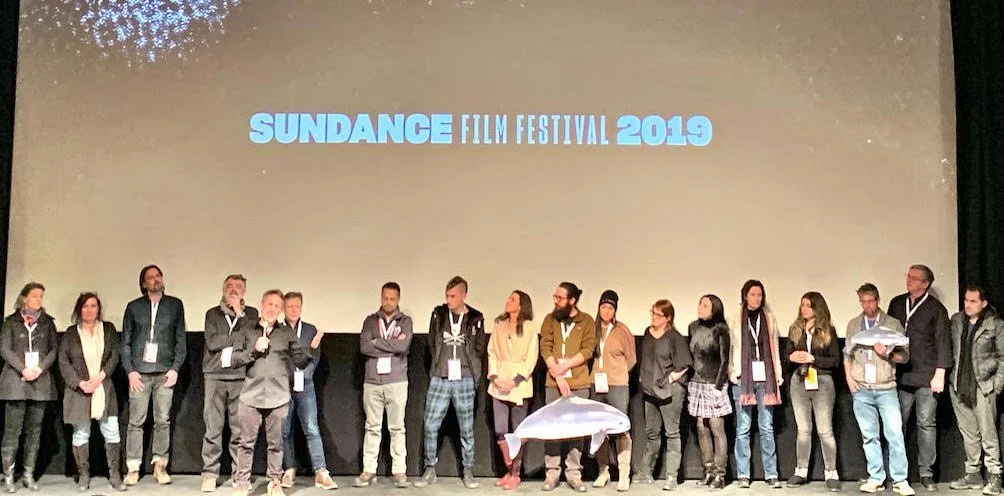
Our Sea of Shadows crew at our Sundance premiere.
Getting into a major festival still brings real exposure. Just don't build your entire plan around the hope of an acquisition.
The reframe that changes everything
If you take one idea from this guide, make it this: distribution is networking.
You built trust with sources, collaborators, and communities to get your film made. Distribution is simply the continuation of that relationship-building, expanded outward. It's less about campaigns and ad spends, and more about finding the people who already care about what your film is about, and making it as easy as possible for them to share it.
That's a job independent filmmakers are uniquely equipped to do. Nobody knows your film's community better than you.
Filmmakers who raise a portion of their budget via crowdfunding have a leg up on the networking process. One of the biggest benefits of running a crowdfunding campaign is that it forces the filmmaking team to network extensively before the film is complete. Running a crowdfunding campaign at any stage of the filmmaking process can be thought of as the first step of a self-distribution campaign.
Quick reference: tools and resources
Kinema — grassroots community screening platform
Eventive — another screening platform option, worth comparing
Wild Lens is a collective of filmmakers and media producers dedicated to telling stories about wildlife, conservation, and the people behind the science. Have questions about self-distribution, or a story of your own to share? Get in touch.