
RATTLED - the story of the Eastern Massasauga rattlesnake
By Gregg McLachlan
Cinematographer, WorkCabin Films
Ever tried to walk through mud so thick, with your hands full of camera gear, that your boots threaten to disappear into the void with every step? Welcome to a normal Tuesday on the set of RATTLED.
If you've caught our Instagram posts over the past while, you've seen the fragments: a helicopter flight, tall sedge, a long lens, someone frozen mid-step for way longer than looks comfortable. Producer Cynthia Brink and I have been a bit vague about this project on purpose. We’ve needed time to find our footing (literally!). But it's time for the real update. The documentary is called RATTLED and we are now in Year 2 of filming work, and will likely extend into a Year 3.
RATTLED follows the Eastern Massasauga rattlesnake in one of southern Ontario, Canada's largest remaining bog habitats. It’s a species at risk that now survives in only three locations in our province. Each habitat is unique which is part of our story arc.
If you've never worked with pit vipers before, the Massasauga is not a snake that wants to be on camera. It's small, secretive, and relies almost entirely on cryptic camoflauge over confrontation. In fact, during one our filming excursions with researchers, a rattlesnake rested just inches from the side of the trail as five of us walked past. Only the sixth person in our group spotted it!
Most people who've lived beside Massasauga rattlesnake habitat their whole lives have never actually seen one. That absence is exactly what has let the myth turn into persecution baked into local folklore.
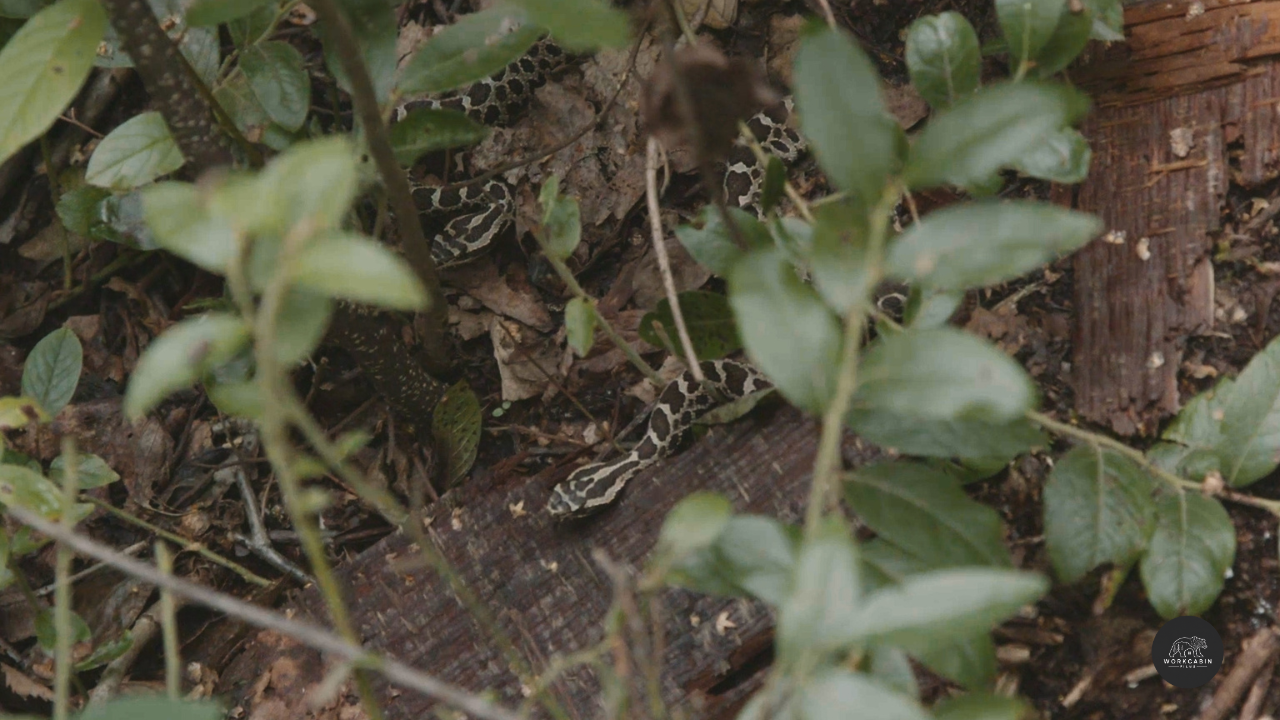
The Eastern Massasauga rattlesnake
We're working in a location that is one of the largest protected bogs left in Canada. The brutal truth is bogs don't get the cinematic reputation that old-growth forest or coastline do, but visually and ecologically bogs are incredible places for biodiversity. And for humans, they play a key role in the hydrology of the surrounding region, which by the way, just happens to be one of Canada’s fastest growing urban areas and supports a large agriculture industry.
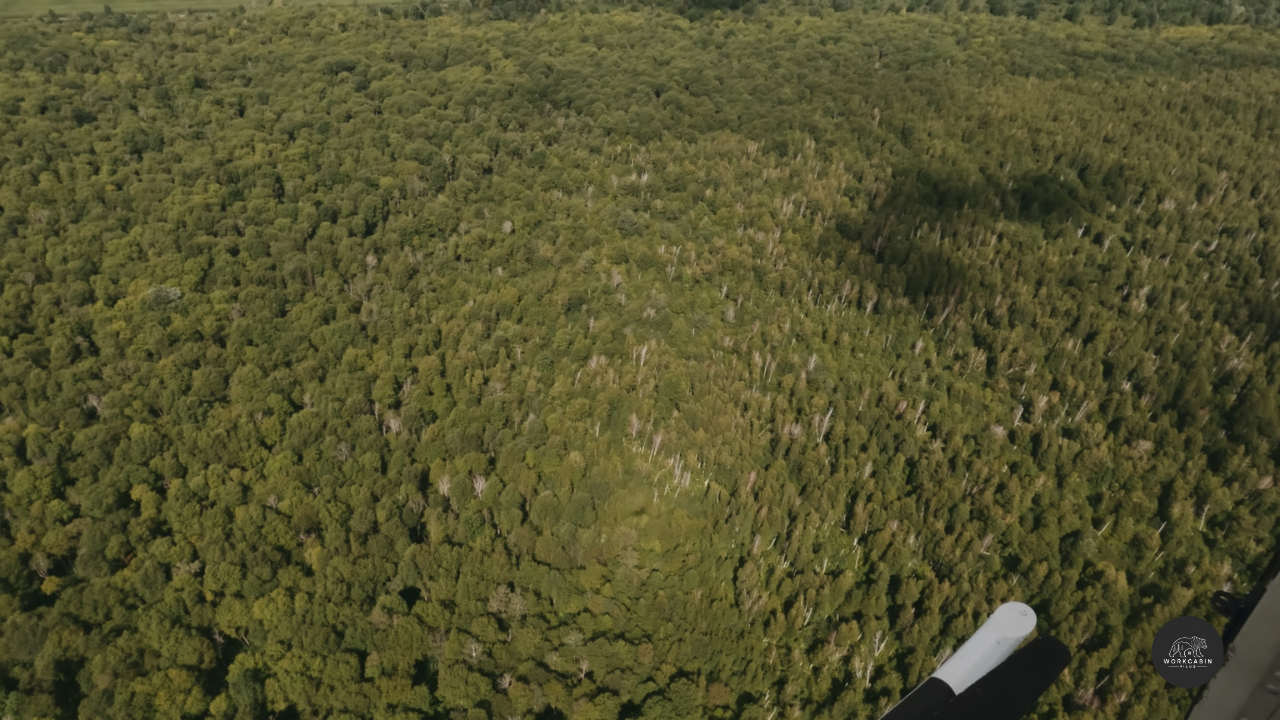
The filming location - southern Ontario
Filming in an extreme environment
When glaciers retreated in North America thousands of years ago, this bog is estimated to have been 500,000 acres in size. Today it is just 3600 acres and protected, but human-caused pressure exists on all sides. A giant quarry on one side. Industrial strip mall-type developments on another side. Farmland all around. And then there are the invasive plant species, like European Buckthorn, now spreading rapidly in some some parts of the bog itself and crowding out and killing off native species.
If you've never worked a true mud bog, a quick heads-up: bring gear you're willing to lose. It’s not quicksand, but we can confirm that If you fall, you’ll need a helping hand to get back up. And who the heck knows where a lens cap disappeared. You’ve got more on your mind, especially when you’ve tripped and ended up laying on your back squished deeper into the mud, while still frantically holding your gear aloft to keep it from joining you in the mud. Working here in the muddy areas is very strategic. You keep moving your weight, know your exit line before you commit to a position, and never set your camera backpack down anywhere you haven't tested first.
Filming here is definitely different. Permits are required. Waivers are signed. After all, we are working with venomous reptiles. And you’ll need guides who are top trained herpetologists with permits to catch these snakes as part of their research. But that doesn’t mean every excursion results in finds. These snakes don’t just present themselves. So pack the patience. Lots of it.
Good things come to those who wait
There are no illusions here on this project that it's mostly patience. Getting broll of the snakes is hard. I still don’t think we have enough. We walk trails near known habitat, go quiet, and wait, often working alongside the researchers and conservationists who've spent entire field seasons doing this same slow, unglamorous work of tracking individuals, logging habitat use, building the dataset that'll actually inform how this population gets protected as the landscape around it keeps developing. Every usable clip has come from letting the snakes set the terms.
So let’s talk about why we’re doing this. We make conservation films because we think audiences protect what they understand, and the Eastern Massasauga might be the most misunderstood animal in our province here in Canada. If RATTLED lands the way we want it to, it does what the best wildlife docs do: replaces a stock fear with a specific, patient, genuinely remarkable animal and makes the case for a wetland most people will never set foot in but should still care about.
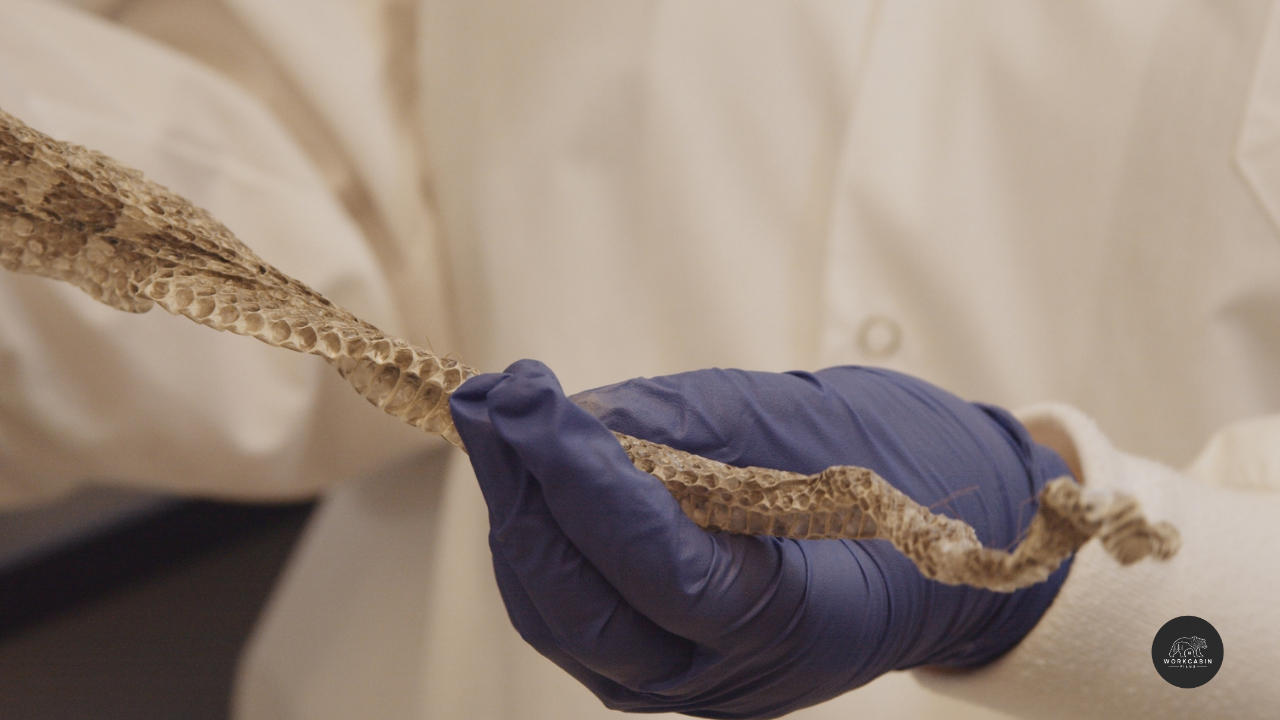
A scientists the shedded skin of an Eastern Massasauga rattlesnake
When urgency and funding don’t align
Now here’s the kicker: We didn't think this story could wait for the usual development-and-financing runway and grant cycle timelines. So we put our own resources into this film and got to work, because the story mattered more to us than following the usual playbook. We're building RATTLED the way it deserves to be built which is carefully, honestly, and close to the people and the place it's about.
We get it, though. Not everyone can just invest their time and resources into this kind of approach. We’re fortunate that we also have fully-funded projects on the go too.
In our line of work as conservation filmmakers we’re learning hard and fast that times have changed in our industry. No longer can we rest on solely doing funding pitches for a film that might happen.
Trailer premiere
We’re now releasing the official trailer for RATTLED to show that production is already underway. That means when we do start seeking potential backers we won’t be asking them to bet on whether this documentary gets made. It's being made, right now.
Every step we take has been about building relationships and trust that we are the ones to tell this story.
Yes, we're still in mid-production and we have plenty of field time left before this one's locked. We'll keep sharing more from the field as we go, including some of the technical and logistical lessons we're picking up along the way. Bog work and working with venomous reptiles has a learning curve, and we'd rather pass it on than keep it to ourselves.
More soon, hopefully with both boots still on.
WorkCabin Films is an in-the-muck conservation filmmaking collaboration between filmmaker Gregg McLachlan and producer Cynthia Brink. We make films about the wild places, species and people working to protect them. Learn more at WorkCabinFilms.ca or follow us on social media @WorkCabinFilms